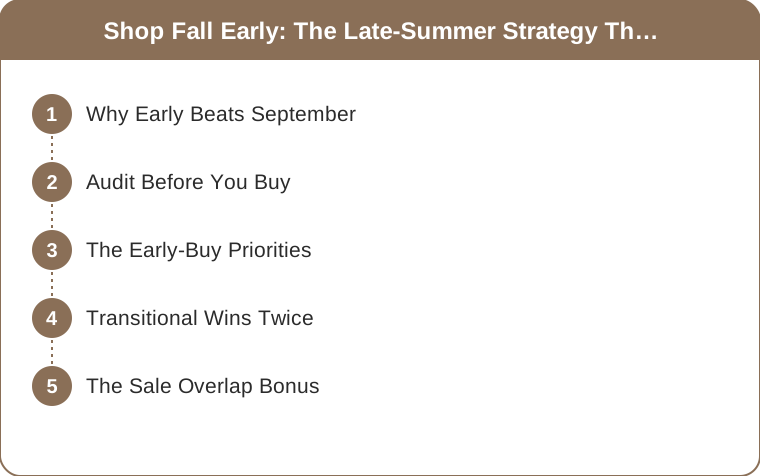
Shop Fall Early: The Late-Summer Strategy That Wins September
Quick Answer: Retailers drop fall collections in July and August, and the popular sizes in boots, coats, and hero knits sell out weeks before actual sweater weather. Shop in August: audit your closet first, buy boots and outerwear while the size run is complete, prioritize transitional pieces you can wear immediately, and fund it with summer clearance running alongside the new stock.
It’s 88 degrees. You’re in shorts. And the smartest fall shopping window of the entire year is open right now.
By the time the first genuinely crisp morning arrives, the boots you wanted exist only in a size 5 and a size 11, and the coat is “restocking soon” forever.
Fall fashion runs on a calendar that has nothing to do with the weather. Here’s how to use that.

Why Does Shopping Fall in August Beat Shopping in September?
Because of how retail inventory works, not because of some shopper folklore.
Fall collections land on shop floors 6 to 10 weeks before the season they’re named for. That’s a deliberate merchandising choice — retailers want a full sell-through window before holiday stock needs the space.
The practical consequence: the middle sizes go first. By mid-September, a popular boot style is typically missing 6 through 8.5, and the “core” coat colors — camel, black, charcoal — are gone in exactly the sizes most people wear. What’s left is the size extremes and the colors nobody chose.
Early shoppers choose. Late shoppers settle. That’s the whole mechanism.
What Should You Do Before You Buy Anything?
Spend one hour in August with last fall’s wardrobe. Not shopping — auditing.
Pull everything out and sort into four piles:
- Survived and still loved. These define your actual style, not your aspirational one.
- Tired but structurally fine. Candidates for a repair, a dye, or a tailoring fix at a fraction of replacement cost.
- Never worn. Ask why honestly. Wrong fit? Wrong life? That answer prevents the same purchase this year.
- Genuine gaps. The thing you needed weekly last year and didn’t own.
Then write the gaps down and shop the list, not the mood. Strategy spends better than excitement, and August has no urgency to cloud the judgment — which is precisely why it’s the good month to decide.

Which Fall Pieces Should You Buy Early?
Priority order, based on how fast the size run collapses:
- Boots — buy first. Size availability disappears fastest here, and boots are the hardest category to substitute. If you know your size in a brand, buy in August.
- Quality coats and blazers. Investment outerwear sells steadily all season, so it doesn’t vanish overnight — but the good colors do, and coats rarely get deeply discounted before December.
- Hero knits in core neutrals. Cream, oatmeal, charcoal, camel. These are the pieces that carry an entire wardrobe, and they’re the ones that sell out.
- Denim in your actual current size. Not aspirational sizing. The style you wore constantly last year, replaced.
What can wait: trend fillers, novelty prints, statement accessories, anything in a color you’ve never owned before. Those reliably hit 30–40% off by late October, and buying them early is where budgets die.
The principle: buy longevity early, gamble later.
The 5 Mistakes Everyone Makes Shopping Fall Early
- Buying for the weather instead of the wardrobe. August heat makes wool feel abstract, so people buy the light stuff and skip the coat. Then October arrives.
- Buying trend pieces first because they’re exciting. The trend piece will be discounted in eight weeks. The boot won’t exist.
- Skipping the audit. Every unaudited fall haul contains at least one duplicate of something already in the closet.
- Ignoring the clearance rack on the way out. More on this below — it’s the free money nobody picks up.
- Buying anything that only works in deep winter. The single most wasted category. It gets four weeks of wear and takes a full year of closet space — this is the one that quietly ruins the cost-per-wear math.
Why Are Transitional Pieces the Smartest Early Buy?
Because they start earning immediately.
Prioritize things that work in a 65-degree September evening and a 45-degree November morning: lighter knits, leather and suede jackets, ankle boots, shirt-jackets, trench coats, midweight cardigans.
A leather jacket bought in August gets worn on the next cool evening — maybe within two weeks. A heavy wool overcoat bought the same day sits untouched until November. Same money, radically different cost-per-wear.
Double-season pieces double their value. Buy those first, and let the deep-winter category wait until you can see it coming.
How Do You Fund the Fall Wardrobe?
Late summer is the only moment of the year when clearance and new arrivals sit in the same store.
Summer stock hits 50–70% off in August while fall inventory arrives at full price. That overlap is the arbitrage: buy next summer’s linen, swimwear, and sandals at deep discount, and let the savings fund the boot purchase.
It requires one mental adjustment — buying a swimsuit you won’t wear for nine months. But you’d have bought it in May at full price anyway, and cost-per-wear doesn’t care which month you paid.
Shop both directions in a single trip. It’s the most efficient wardrobe hour of the year.
Frequently Asked Questions
When do stores actually put out fall clothes?
Most major retailers begin fall floor sets in mid-to-late July, with the full collection landing by mid-August. Department stores tend to run about two weeks earlier than independent boutiques. Online drops often precede in-store by a week.
Is it better to buy fall clothes on sale later?
For trend pieces and layering basics, yes — those reliably discount by late October. For boots, coats, and core knits, no: the sizes you need are gone before the discount arrives, so you’re choosing between full price and nothing.
How much should I budget for a fall wardrobe refresh?
Skip a fixed number and use the audit instead. Most people find 2–4 genuine gaps, and one of those is usually the expensive item (boots or a coat). Budgeting for one investment piece plus two or three supporting pieces covers a realistic year.
What if I don’t know what I need until the weather changes?
That’s what the audit solves. Last fall’s wardrobe is a complete record of what you actually reached for and what failed you — reading it in August tells you what October will need before October arrives.
TL;DR:
- Fall collections land 6–10 weeks early; mid-sizes and core colors sell out before real sweater weather.
- Audit last fall’s closet for one hour in August, write down the genuine gaps, then shop the list.
- Buy boots first, then coats and hero knits in neutrals. Trend fillers can wait for October discounts.
- Prioritize transitional pieces — leather jackets, ankle boots, shirt-jackets — that start earning in September.
- Raid the 50–70% summer clearance in the same trip to fund the investment buys.
Keep Reading
This article is for general styling and informational purposes only. Trends, sizing, availability and pricing may vary by brand and season.