The Pre-Fall Window: Shopping Autumn Before the Rush (Without Jumping the Season)
Quick Answer: Fall collections land in stores in late July and August with full size runs, and the best coats and boots sell through before the first genuinely cool morning. Shop the pre-fall window in wearing-order — transitional layers first, coat and boot investments second, deep-winter pieces last — then wait for the actual weather to wear any of it.
It is 88°F. You are standing in a shop looking at a wool coat, feeling slightly unhinged.
This is, annoyingly, the correct time to buy the coat. Retail runs about two months ahead of the weather, which means the September shopper — the sensible one, the one who waits until it’s cold — arrives to find a picked-over rack of size 4s and size 18s in the colour nobody wanted.
The oldest timing paradox in the business: autumn’s best pieces are sold in the heat.

When Should You Actually Shop for Fall?
Late July through August for full selection at full price. This is when collections land complete — every size, every colourway, the good versions before anyone’s touched them.
Early September is still fine for most categories, but the popular coats and the mid-range boots are already thinning out.
Late September onward is where you meet the picked-over rack, and by then you’re also competing with everyone who’s suddenly cold.
Late October to November brings the first real markdowns, which is genuinely a good window — if you’re relaxed about what you get and you’re buying for next year as much as this one.
The practical read: buy the things you’re fussy about early, and let the things you’re flexible about wait for a sale.
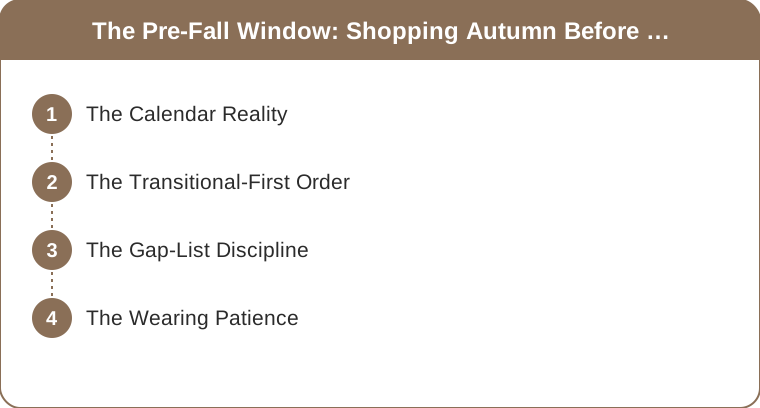
The Transitional-First Buying Order
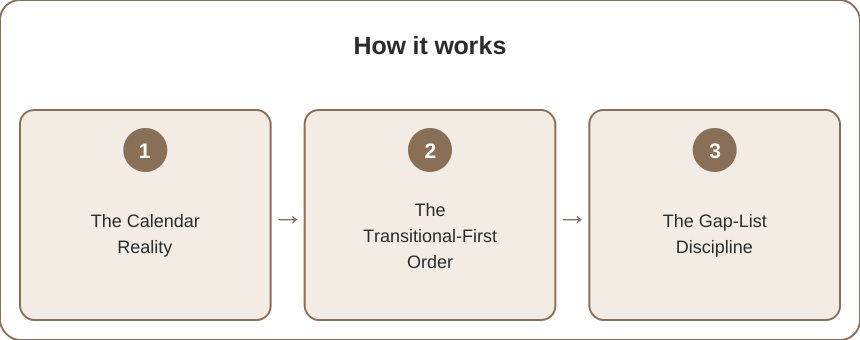
Buy in the order you’ll wear it. This is the whole discipline, and it keeps the whole exercise from turning into a wardrobe full of things you can’t touch for three months.
1. Transitional pieces. Light layers, fine-gauge knits, a trench, a denim or leather jacket, mid-weight trousers. These bridge from this season, so they’re wearable within weeks. Buy these first, in late July.
2. The anchor investments. The coat and the boots. Buy these in August, calmly, with the full size run available. These are the two purchases where being early makes the most difference — they’re the highest-visibility, highest-cost items, and they’re the first to sell out in the good sizes.
3. Deep-fall and winter pieces. Heavy knits, thermals, the proper winter coat. These can wait until September, and often benefit from waiting.
Buying in wearing-order means you’re rarely more than a few weeks from actually using something you bought.

Why the Gap List Comes Before the Browsing
Fall excitement produces the most predictable impulse buys of the entire year — the fourth beige knit, the boots that duplicate boots you own, the coat bought for the version of autumn in your head rather than the one where you commute.
The fix takes about forty minutes:
Review last autumn’s wardrobe now, before you browse. Pull out the fall and winter pieces you stored and be specific about three things:
- What wore out. Pilled knits, cracked boot soles, a coat lining that’s gone. These are replacements, and they’re the first line on the list.
- What was missing all season. The gap you improvised around for four months. Everyone has one — a mid-weight jacket, a knit that works under a coat, boots that handle rain.
- What you never wore. Be honest about why, and don’t buy its cousin.
Write the gap list before you look at a single shop. Then shop the list. Anything not on it needs to justify itself against the one-in-one-out rule.
The Wearing Patience Half
Here’s the part that makes the strategy actually work, and it’s the part people skip: buying ahead is not the same as wearing ahead.
A suede boot in an August heatwave serves nobody. Neither does the chunky knit deployed on a 78°F September afternoon because you’re excited about it. Both read as trying too hard, and both are genuinely uncomfortable.
So separate the two calendars completely:
- Buy on the retail calendar — late July and August.
- Wear on the weather calendar — when it’s actually cool.
- Bridge with transitional pieces, which is exactly what they exist for.
Right now, in early August, that means the fine-gauge knit over a summer dress on a cool evening. The trench on a rainy morning. Closed-toe flats instead of sandals. Layering that responds to real temperatures rather than to a mood board.
The pre-fall shopper wins twice: full selection at the register, and right-on-time debuts on the street. Jump the season in the shop, never on the pavement.
Myth vs Fact
Myth: Waiting until autumn gets you a better price. Fact: It gets you a worse selection at the same price. Real markdowns don’t arrive until late October at the earliest, by which point the good sizes in the popular coats are long gone.
Myth: Buying a coat in August means you’ll be sick of it by October. Fact: You’ll have worn it exactly zero times by October. Buying ahead and wearing on time are two separate calendars — that’s the entire strategy.
Myth: Pre-fall collections are just early autumn clothes. Fact: Pre-fall is genuinely its own category, designed for transitional weather — lighter layers and mid-weight fabrics that work in September rather than November. It’s the most wearable-soonest tier in the shop.
Myth: You need to replace your autumn wardrobe every year. Fact: Most of it should carry over. The gap list exists precisely so you’re buying two or three specific things rather than re-buying a season you already own.
Mini FAQ
When do fall clothes go on sale?
The first meaningful markdowns usually arrive late October and deepen through November, with the biggest reductions in late December and January. The trade-off is straightforward: full price in August buys you full selection, while November prices buy you whatever’s left in your size.
Is it worth buying a winter coat in summer?
For a coat you actually care about, yes — coats sell out in the popular sizes and colours faster than any other autumn category, and the best versions are gone by mid-October. If you’re relaxed about which coat you end up with, waiting for the January sales is a perfectly good strategy.
How do I stop overbuying during pre-fall sales?
Write the gap list before you browse, and treat it as the whole shopping list. Anything not on it should have to argue its way in against something leaving your wardrobe. The list works because it’s made while you’re being analytical rather than while you’re standing in a shop feeling optimistic about autumn.
TL;DR
- Fall collections land late July to August with full size runs; September shoppers get the leftovers.
- Buy in wearing-order: transitional layers, then coat and boots, then deep-winter pieces.
- Coats and boots are the categories where being early matters most.
- Audit last autumn’s wardrobe and write the gap list before you browse.
- Buying ahead ≠ wearing ahead — the suede boot waits for actual boot weather.
- Bridge the gap with transitional pieces that work in today’s temperatures.
Shop on the retail calendar, dress on the weather calendar, and you win both ends.
Keep Reading
This article is for general styling and informational purposes only. Trends, sizing, availability and pricing may vary by brand and season.