Scarf Season: The Fall Styling Guide From Chunky Wraps to the Belted-Coat Trick
The scarf is fall’s highest-impact accessory — the piece that finishes coats, adds the texture the season demands and costs least in the outerwear equation — and the styling moves are a learnable library. The scarf-season guide.
The Styling Library
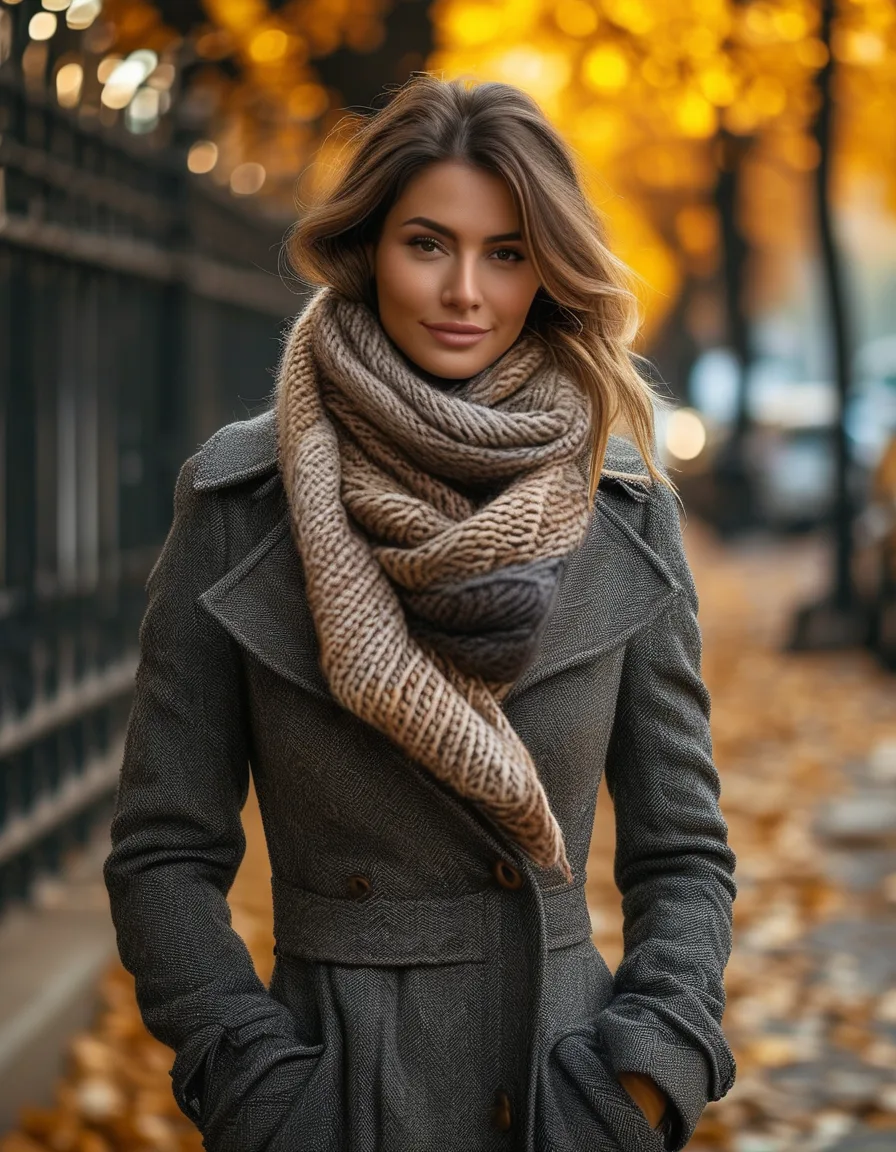
The moves: the classic drape (the long scarf hung open — the effortless vertical from the column logic; the coat-finishing default), the once-around loop (the everyday standard — the volume-at-the-neck warmth), the blanket-scarf wrap (the oversized square worn as a shawl-coat — the belt-over-scarf trick converting it to a layer per the belt logic; the travel-blanket double), the under-coat tuck (the scarf INSIDE the collar — the sleek cold-day line per the layering logic; the tailored look kept), the over-shoulder throw (the one-shoulder drape — the editorial finish for the plain coat), the French knot (the folded-loop pull-through — the compact polish), the belted-coat integration (the scarf under the coat’s belt — the built-in-looking layer; the trench-and-scarf classic per the trench logic), and the hair-and-bag crossover (the silk-square moves from the scarf logic continuing through fall).
The Proportion-and-Color Craft
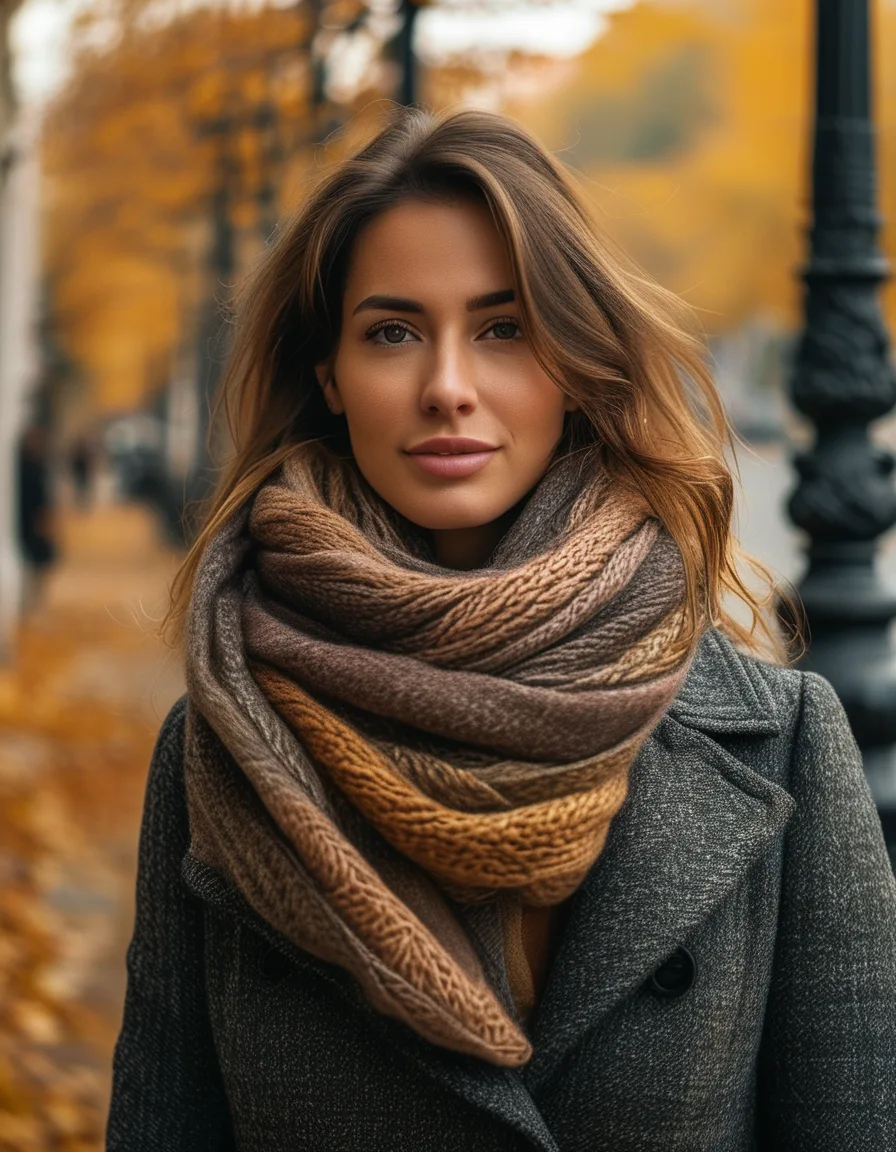
Styling it well: the scale matching (the chunky scarf with the substantial coat — the fine scarf with the tailored; the scarf-coat weight harmony per the proportion logic), the petite-and-tall notes (the oversized scarf swallowing small frames — the medium-scale and the tuck styles per the petite logic; the tall frame carrying the blanket drama per the tall logic), the color strategy (the scarf as the near-face color from the palette logic — the outfit’s accent delivered at eye level; the neutral-coat-bright-scarf formula; the tonal-wrap column for the monochrome per the monochrome logic), the texture play (the scarf adding the season’s tactile interest — the ribbed-against-wool, the cashmere-against-leather per the texture logic), the pattern bridge (the plaid-and-striped scarves linking outfit colors per the print logic), and the one-statement calibration (the loud scarf over the quiet coat — the statement dose per the statement logic).
The Scarf-Wardrobe Edit
The small collection: the core three (the neutral cashmere-or-wool long scarf — the blanket square in a plaid-or-tone; the silk square carrying over from the silk logic), the fabric truths (the cashmere-and-wool warmth-to-weight — the acrylic itch-and-static honesty; the secondhand cashmere goldmine per the thrift logic), the color selection (the near-face flattery test from the palette logic — the coat-wardrobe compatibility check), the care notes (the knit-scarf depilling and folding from the knit-care logic — the silk rolled per the scarf logic), the storage system (the scarves visible-and-reachable — the hook-or-drawer organization per the closet logic; the seen scarf being the worn scarf), and the closing frame (the season’s cheapest transformation — the drape, the wrap, the belt trick; the coat wardrobe multiplied by the scarf drawer; the fall, finished at the neck). Three scarves, scale matched to the coat, color at the face: the season, wrapped.
The scarf multiplies the coat wardrobe: master the open drape, the once-around, the belted blanket-wrap (a scarf becomes a layer under a belt), and the under-collar tuck for tailored days. Match scarf scale to coat weight, deliver your best near-face color at eye level, and build just three — a neutral long, a plaid square, a silk carryover; secondhand cashmere is the goldmine.
Keep Reading
This article is for general styling and informational purposes only. Trends, sizing, availability and pricing may vary by brand and season.